The History of Shortstown, Bedfordshire
From Airship Pioneers to Community Power
Shortstown sits on a ridge in Bedfordshire once known as Tinker’s Hill, a site with ancient roots that later gained fame as the birthplace of Britain’s airship dreams. A century ago, this windswept hilltop was chosen for a bold World War I project – a massive airship construction station – which transformed open fields into a purpose-built village for aviation workers. Named Shortstown after the pioneering Short Brothers aviation firm, the settlement grew alongside the towering Cardington Airship Sheds (giant hangars of their day) that housed the world’s largest flying machines. Over the years, Shortstown’s fortunes soared and plunged: the excitement of cutting-edge technology and imperial ambition, the shock of the R101 airship disaster, the bustle of a major RAF base, followed by decline and then a vigorous 21st-century resurgence. Today, Shortstown is a modern community that proudly celebrates its unique heritage – from ancient legends to airship innovation – even as its residents write a new chapter of local empowerment.
Early Origins: Tinker’s Hill and a Bunyan Connection
Long before Shortstown existed, its hilltop location was known for its commanding views and intriguing name. The earliest records of the area appear in the Domesday Book of 1086, which lists a nearby hamlet called Harrowden (just north of present-day Shortstown) as Hergentone. The name derives from the Anglo-Saxon words “hearg” (a pagan temple or shrine) and “dūn” (hill) – literally “hill of a heathen temple.” This suggests that Tinker’s Hill – as the rise came to be known in later centuries – may have been a pre-Christian religious site, perhaps home to a pagan shrine or ancient barrow overlooking the River Great Ouse valley.
By the 13th to 16th centuries, a windmill stood on this hill, and it was commonly called Windmill Hill by the 1600s. During this period, the surrounding parish was home to one of England’s most famous Christian writers: John Bunyan. In 1628, Bunyan was born in the hamlet of Harrowden, just a few hundred yards from Tinker’s Hill (the site of modern Shortstown). Bunyan’s father was a travelling tinker – an itinerant tinsmith – a coincidence noted by local historians given the hill’s traditional name. While there’s no evidence that Bunyan himself frequented the hilltop, his early life in the area forms a quaint footnote to Shortstown’s pre-history. The historic parish of Eastcotts (within which Shortstown would later rise) was part of Bunyan’s world; he would have been familiar with the general landscape long before an airship ever darkened its skies.
World War I: Building the Airship Village
Shortstown as a settlement was born out of wartime necessity and technological ambition. During World War I, the British Admiralty urgently needed sites to build airships – then a revolutionary new weapon and mode of transport. In 1916, after surveying potential locations, the government chose farmland near Cardington (east of Bedford) on condition that the local landowner, Whitbread, agreed to sell part of their estate. The appeal was clear: broad, flat open land for take-offs and landings, good rail links to London, and distance from coastal attack. By October 1916, the Admiralty acquired the site for £110,000 and contracted the renowned aircraft manufacturers Short Brothers to establish a vast airship works here.
The transformation was dramatic and swift. In early 1917, workers broke ground on the Royal Navy Airship Station Cardington. They laid out a massive complex including a factory, gas works, workshops, and the first colossal airship shed – a steel-framed colossus 700 feet long and over 150 feet high. These gargantuan hangars were called “sheds” by the Navy and were among the largest structures in Britain at the time. Anticipating the need for on-site labour, Short Brothers also planned a model village for the hundreds of employees streaming in. Around 600 homes were proposed in a self-contained community near the airfield.
Thus Shortstown was born – a company town named after the Short brothers themselves. By June 1919, 151 red-brick houses were completed in neat terraces, designed in a simplified neo-Georgian style with gardens, green verges, and curved streets following “garden city” planning ideals. A central social club was established for leisure and gatherings, though wartime conditions delayed other amenities like shops and churches. The population of Eastcotts parish exploded from 848 in 1911 to over 2,000 by 1921 due largely to this influx of airship workers and their families. For the first time, Tinker’s Hill – until then quiet fields – was alive with the sounds of industry: riveters hammering at metal girders, the hiss of the hydrogen plant, and the bustle of a brand-new village.
Two wooden-framed airships (R.31 and R.32) were constructed in 1917–1918, but they were completed too late to see action in WWI. With the war’s end, military funding for airships waned. In April 1919, the Short Brothers company withdrew as the government reorganised its airship strategy. The Cardington site was taken over by the Air Ministry and renamed the Royal Airship Works, pivoting to develop a new generation of rigid airships for civilian and military use.
The R101 and the Airship Legacy
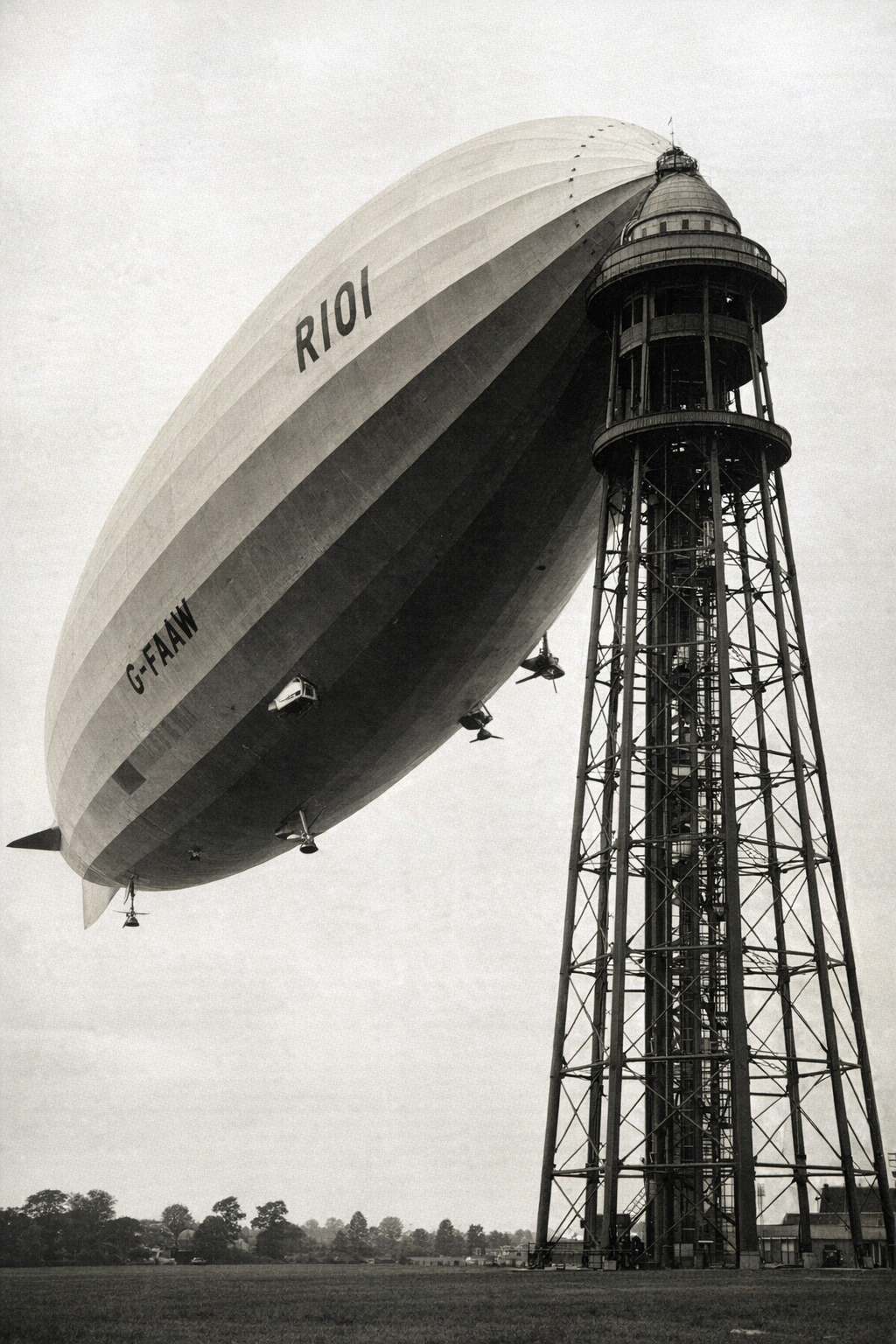
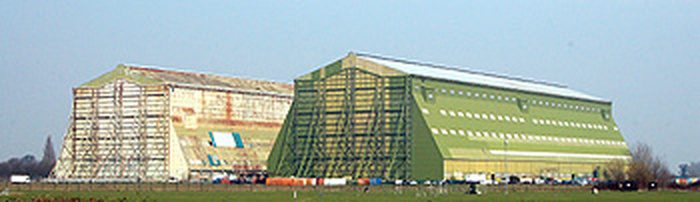
In the late 1920s, Shortstown reached the pinnacle of its original purpose as the Royal Airship Works embarked on the Imperial Airship Scheme – a plan to connect the British Empire via regular airship routes. The crown jewel of this effort was Airship R101. At over 730 feet long (after a mid-project extension), R101 was intended as a triumph of engineering – the largest aircraft ever built at the time. Its construction required enlarging Shed No. 1 in 1926–27 to an extraordinary 812 feet in length and 170 feet in height. A second enormous shed was dismantled from a naval airship base in Pulham, Norfolk, and re-erected at Cardington to the same colossal dimensions, becoming Shed No. 2 in 1928. These twin Cardington Sheds towered over Shortstown – steel-clad behemoths visible for miles, emblematic of the village’s identity.
R101 was completed in 1929, and residents often gazed up as the silver giant floated above during test flights. Excitement mounted for its maiden long-distance voyage to India, scheduled for October 1930. On a stormy evening, 4 October 1930, R101 finally departed Cardington with great fanfare – eight miles of cheering crowds lined its route out of Bedfordshire. The jubilation was tragically short-lived. In the early hours of 5 October, battling strong winds and rain, the airship crashed into a French hillside near Beauvais and burst into flames. Forty-eight of the 54 people on board were killed, including Air Minister Lord Christopher Thomson (Baron Thomson of Cardington), Air Vice-Marshal Sir Sefton Brancker, and airship pilot Major George Herbert Scott. The disaster shocked the nation and ended Britain’s airship programme – the sister ship R100 (which had successfully flown to Canada and back in mid-1930) was immediately grounded and scrapped in 1931.
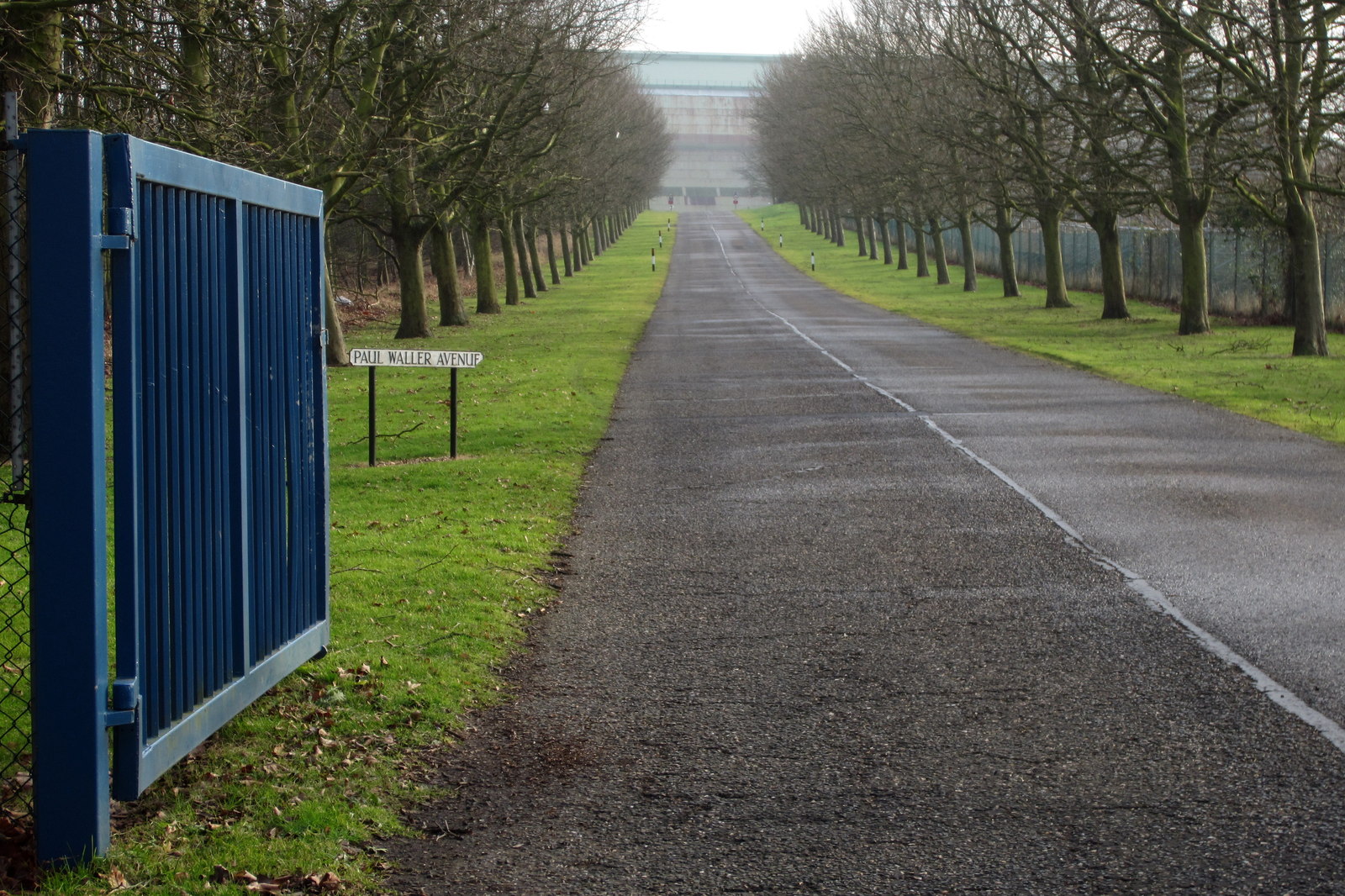
For Shortstown, the aftermath of the R101 tragedy was devastating. Within weeks, one-third of the Cardington airship workforce was laid off as the giant sheds went silent and projects were cancelled. The village’s economic lifeblood had been the airship works; suddenly its raison d’être was gone. Even so, the airship legacy left an indelible mark. In tribute, the high-profile victims of R101 were immortalised in Shortstown’s street names: Thomson, Brancker, and Scott Avenues still carry the names of those lost. (Transcontinental air travel would eventually be achieved by airplanes, but Shortstown’s role in that early chapter of aviation ensured its place in the annals of innovation and sacrifice.)
RAF Cardington and Shortstown’s Mid-Century Life
Although airship construction ended, Shortstown’s story continued as the site pivoted to new military uses. In 1936, the defunct airship base was recommissioned as Royal Air Force Cardington, initially focused on producing hydrogen for barrage balloons and training balloon operators. During World War II, the Cardington station thrummed with activity: developing balloon defences, preparing for air raids, and processing new RAF recruits. The giant sheds – saved from demolition – housed balloon production and later served as storage and training space. The airfield’s runways also saw other experimental projects over the years.
After the war, RAF Cardington became home to the RAF’s primary Recruit Training Centre (from 1953 onward), where every new airman and airwoman received their initial training. This brought a steady influx of servicemen and servicewomen, giving Shortstown a lively, often transient population. New housing sprang up – rows of modest semis and terraces built as “married quarters” for RAF families – expanding the village beyond the original Short Brothers estate. By the mid-1950s, Shortstown’s population approached its historical peak (over 3,600 residents in the parish by 1951).
With more children in the community, a long-awaited development finally occurred: Shortstown got its own lower school. Shortstown County Lower School opened in 1957, four decades after the village’s founding. Prior to this, children had to travel to Cardington or Cotton End for schooling. The new school quickly faced an unusual challenge: extremely high pupil turnover due to military postings. In 1961, a local article dubbed it a “school of transients”, noting that nearly 75% of its students were from RAF families and often moved on within a year or two. Astonishingly, of the 190 children who enrolled when the school opened, only 22 were still there four years later. Despite this churn, teachers and residents took pride in providing a stable, caring environment for these “birds of passage,” ensuring that youngsters would leave with “affectionate memories of Shortstown” wherever in the world they might roam.
Post-RAF Decline and Reinvention
The 1960s–70s brought challenging times. With the end of National Service in 1963 and subsequent defence cuts, activity at RAF Cardington steadily decreased. The recruit training centre moved elsewhere, and one by one the facilities shut down. By the mid-1970s, the Air Ministry had largely vacated the base, and Shortstown’s population dwindled. The parish of Eastcotts (which included Shortstown) lost more than half its residents between 1951 and 1981, dropping to roughly 1,700 people. Many houses in Shortstown were sold off or rented to civilians as the service families left. Local shops and services struggled; even the village’s only general store (a former RAF NAAFI canteen) closed in 1990. When RAF Cardington officially closed in 2000, it ended an 83-year chapter of military presence. What remained were two enormous, empty airship sheds, a collection of derelict buildings, and a community suddenly without its founding purpose.
For a time, Shortstown’s future seemed uncertain, defined by the ghosts of airships past. Yet those same ghosts eventually spurred a rebirth. In 1986, Shed No. 1 was briefly used to build an experimental airship (the Skyship 500 series) and later served as a test site for aerospace projects. Both sheds were granted Grade II* listed status in 1993 due to their rarity and historical importance. Once derelict, the monumental structures slowly found new roles: by the 2000s, one shed was being used for film sets and the other was eyed for next-generation aviation ventures.
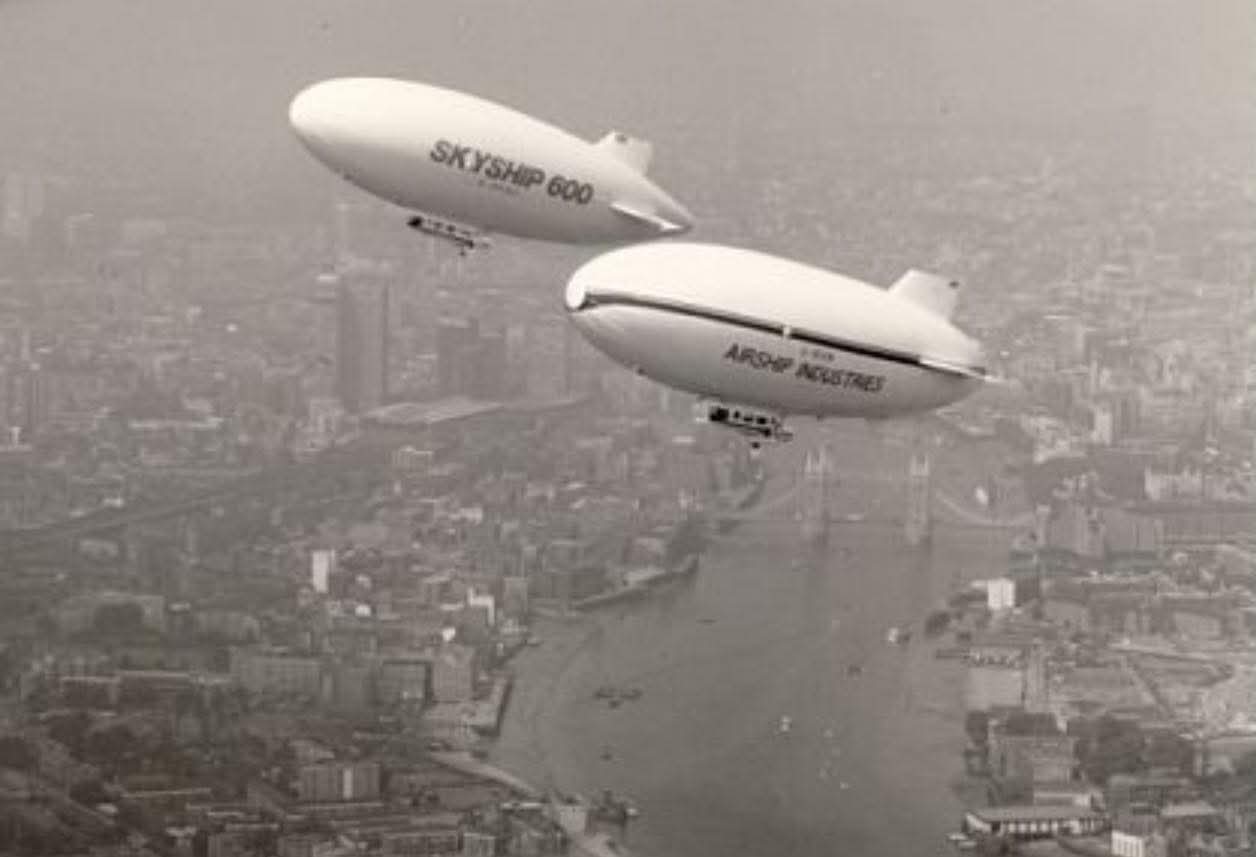
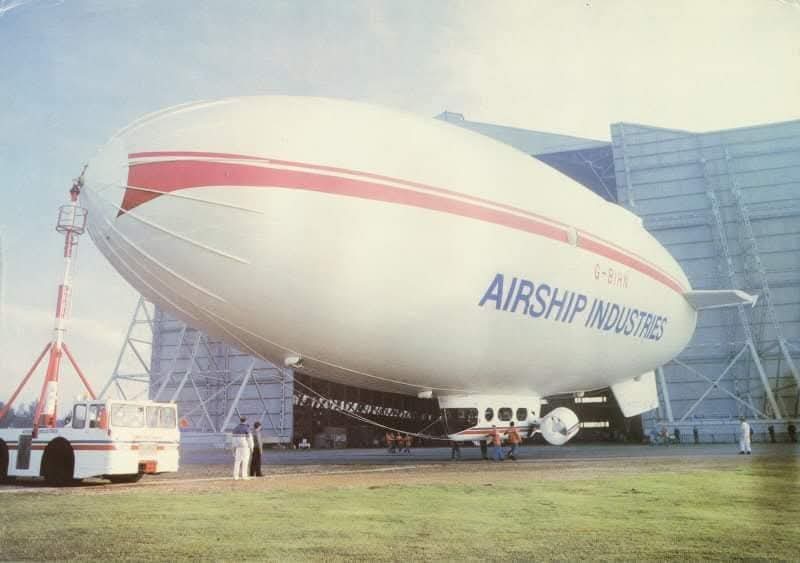
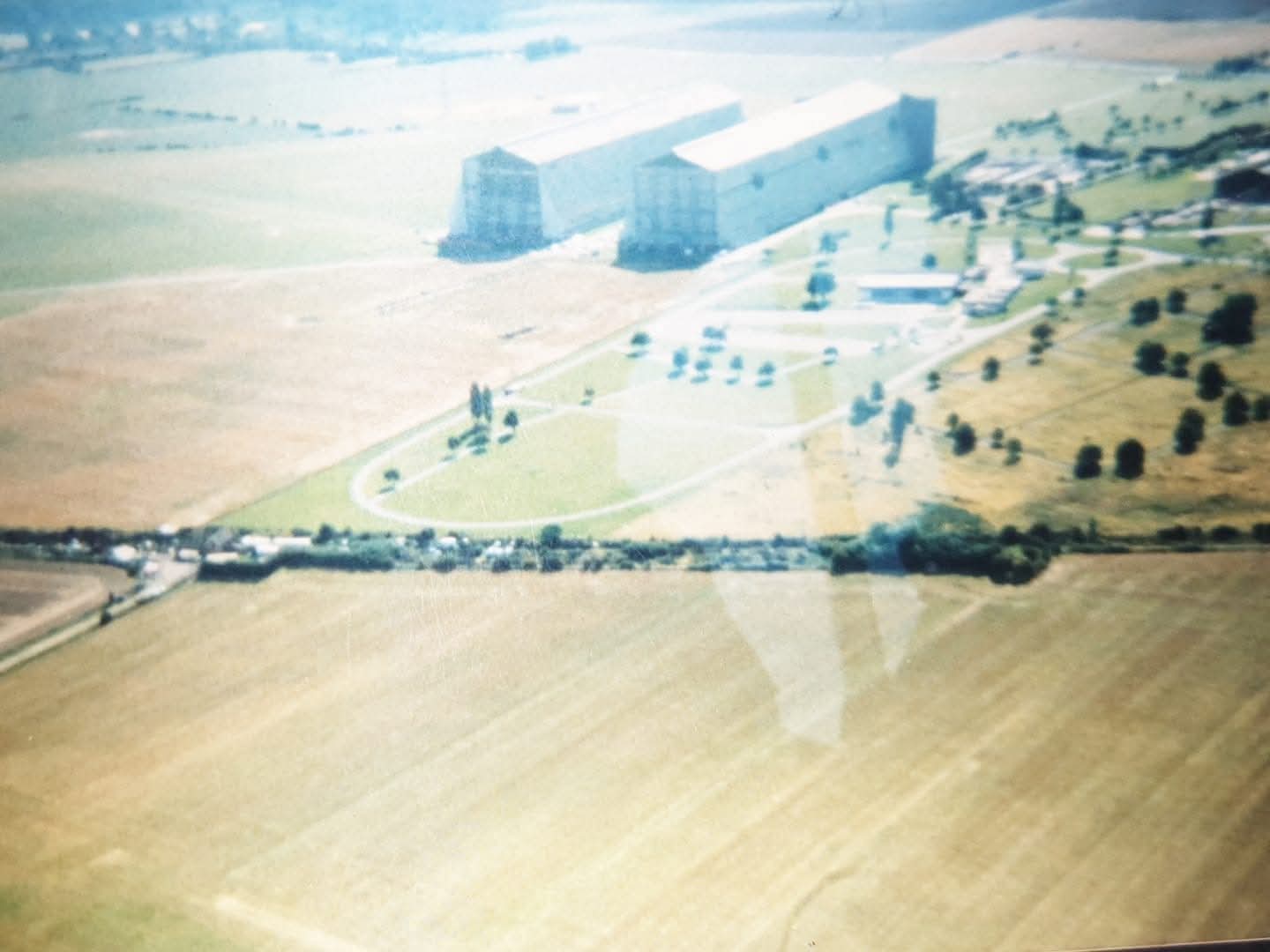
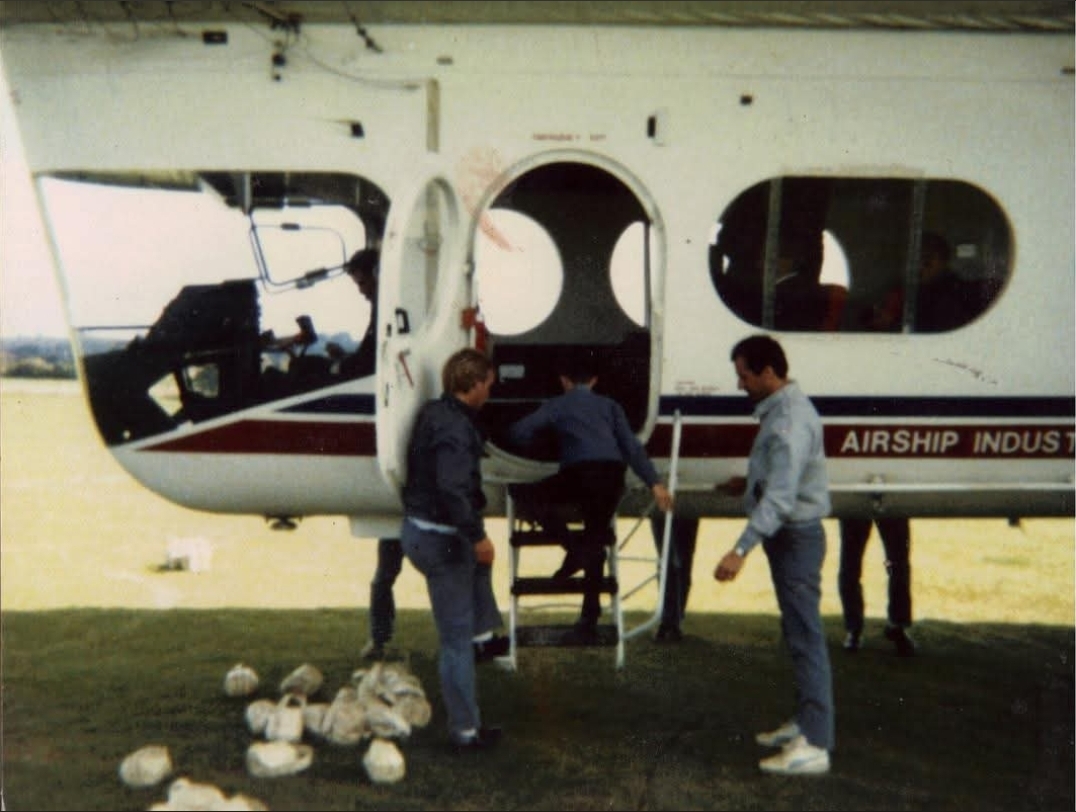
Image Credit Airship Industries
21st Century Renewal and Community Empowerment
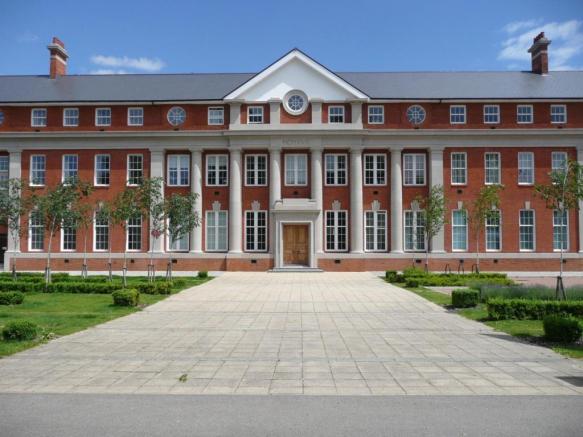
The new millennium brought a wave of regeneration. In the late 2000s, recognising both the demand for housing and the opportunity to revitalise a brownfield site, local authorities and developers launched a comprehensive redevelopment of the former RAF Cardington grounds. Beginning around 2012, a housing project known as New Cardington (also marketed as Eastcotts Green) added roughly 900–1,000 new homes to Shortstown, effectively doubling the village’s size. Alongside the homes came new amenities: an expanded Shortstown Primary School, local shops, a healthcare centre, and green spaces for families. Importantly, the planners also preserved and repurposed key historic structures. The old 1917 Shorts Building – once the Airship Works’ HQ and later an RAF office – was fully refurbished in 2011. Today it houses community facilities (like the Eastcotts Children’s Centre) on the ground floor, with apartments above and displays of historic R101 photographs in its halls.
The iconic Cardington Sheds remain Shortstown’s most visible links to its legacy. In recent years, both have found new life through the film and television industry, each now serving as a vast studio space (one operated by Warner Bros., the other by an independent production company). For a period, one of these sheds also hosted development of the Airlander 10 hybrid airship – allowing residents to see an airship in the skies again – but that project has since moved on. Despite these changes, the sheds continue to anchor Shortstown’s identity, adapting to new uses while preserving their historic presence.
A significant recent chapter in Shortstown’s social history has been the push for community empowerment in managing the new estate. In 2021, after sustained lobbying by the New Cardington Residents Association (NCRA) – including a resident petition – developers agreed to hand over the estate’s management to the people living there. The management company was reconstituted with a board of volunteer homeowners, including local residents Leigh Coombs and Tom Middleton. This resident-led model has been a point of pride, reflecting Shortstown’s strong community spirit. It turned a frustrating situation into a positive story of grassroots action and local self-governance.
Notable People and Enduring Heritage
Shortstown’s journey has been shaped by remarkable individuals and a community that remembers them:
- The Short Brothers – Oswald, Eustace, and Horace. Aviation pioneers who lent their name to the village. They established the airship works in 1916, building Britain’s first military airships at Cardington. Although they departed the project by 1919, their legacy lives on in Shortstown’s very identity.
- Brigadier-General Lord Christopher Thomson (Baron Thomson of Cardington) – Secretary of State for Air and a chief architect of the Imperial Airship Scheme. He took the title “of Cardington” and was a passenger on the ill-fated R101, perishing in the crash. Thomson Avenue in Shortstown commemorates him.
- Air Vice-Marshal Sir Sefton Brancker – Director of Civil Aviation in the late 1920s and ardent airship proponent, also lost aboard R101. Brancker Avenue is named in his honour.
- Major George Herbert Scott – Renowned airship pilot (he commanded the first transatlantic airship flight in 1919) and Assistant Director of Airship Development at Cardington. He died in the R101 disaster, and Scott Avenue is named in his honour.
- John Bunyan – 17th-century author and preacher, born in the adjacent hamlet of Harrowden. While Bunyan predates Shortstown’s founding by nearly 300 years, the landscape of his youth included the very hill where Shortstown arose. His connection underscores the deep historical roots of this “new” village.
These anecdotes and memories highlight how deeply aviation history is woven into Shortstown’s identity.
Shortstown Historical Timeline
-
1086: “Temple Hill” in the Domesday Book
The Domesday Book records Harrowden (modern Shortstown’s vicinity) as Hergentone, from Old English hearg-dūn meaning “hill with a heathen temple.” This suggests an ancient sacred site on Tinker’s Hill.
-
1628: John Bunyan’s Local Roots
John Bunyan, author of The Pilgrim’s Progress, is born in the hamlet of Harrowden, just north of today’s Shortstown. (His father was a tinker – a travelling tinsmith – coincidentally echoing the name of Tinker’s Hill.)
-
1916–1917: Shortstown Founded for Airships
During World War I, the Admiralty acquires farmland at Cardington/Harrowden for an airship works run by Short Brothers (October 1916). By 1917, the first airship shed is built and a village of 151 red-brick houses for workers – later called “Shortstown” – is under construction.
-
1924–1930: R101 – Triumph and Tragedy
The Royal Airship Works builds Britain’s largest airship, R101, extending Shed No. 1 and adding Shed No. 2 (relocated from Pulham) to accommodate it. On 5 October 1930, R101 crashes in France on its maiden voyage, ending Britain’s airship programme (48 lives lost).
-
1936–1950s: RAF Cardington & Village Expansion
An RAF station opens at Cardington in 1936 for barrage balloon training and recruit intake. Shortstown expands with new “married quarters” for RAF families after WWII, and Shortstown Primary School finally opens in 1957.
-
1970s–2000: Decline after the RAF Era
With the RAF gone, Shortstown’s population falls from ~3,675 in 1951 to ~1,710 by 1981, as many families leave and local amenities close. The RAF base formally shuts in 2000.
-
2012–2019: “New Cardington” Revitalises Shortstown
A major development adds ~1,000 new homes (2012–2019), doubling the village’s size. A new village centre, school, and shops are built, and Shortstown celebrates its centenary in 2017. In 2019, Shortstown becomes a separate civil parish, no longer part of Eastcotts.
-
2021: Residents Take Charge
The estate’s management is handed to local residents. Volunteer directors – including Leigh Coombs and Tom Middleton – now oversee shared amenities, marking a new era of community self-governance.
To Close
From its ancient origins on a “temple hill” to its creation as a planned airship community, through wartime upheavals and peacetime challenges, Shortstown’s history is a microcosm of broader themes: innovation, conflict, adaptation, and community resilience. The Royal Airship Works put this small village on the map 100 years ago, and while the airships are long gone, evidence of that era is all around – not just in the giant Cardington sheds and the street names memorialising aviation heroes, but in the very name Shortstown. The village’s social fabric has evolved from a transient workforce of airship builders and military families to today’s diverse, rooted community. In an inspiring recent development, that community has taken charge of its own future through local self-governance and volunteer spirit.
Shortstown’s past is full of highs and lows – literally reaching for the skies with airships and brought low by tragedy and economic downturn. Yet, time and again, it has reinvented itself. Today’s Shortstown is a flourishing neighbourhood on Bedford’s outskirts, one that honours its heritage – whether through preserving historic airship sheds or celebrating local figures like Bunyan and the Shorts – while looking confidently forward. In many ways, the history of Shortstown is the story of a place that, much like the airships that once launched from its fields, has always had the courage to dream, to rise, and to rebuild.
By Leigh Coombs 2026